Nervous system in 3D
See the central structures and branching routes for signals. Explore the 3D model, inspect its parts and learn with guided explanations. Free on Atlas.
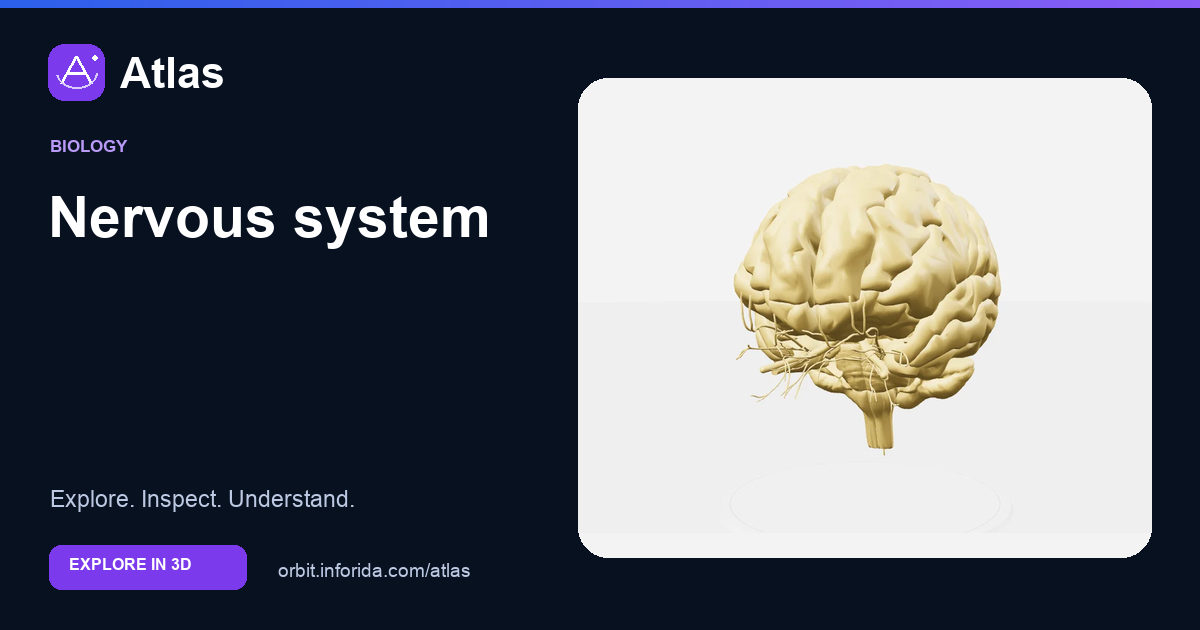
What you can learn
Trace sensory input and motor output as different directions.
The brain and spinal cord form the central nervous system.
Peripheral nerves connect the central system with sensory receptors, muscles and other tissues.
Reflex circuits can coordinate rapid responses through the spinal cord, while the brain also receives and processes information.
Try an investigation
Find a cranial nerve near the brain. Describe an inward sensory route and an outward motor route, distinguishing visible anatomy from structures only discussed in the guide.
Check your understanding
What makes up the central nervous system?
Brain and spinal cord. The brain and spinal cord form the central nervous system.
What connects the central nervous system with the limbs?
Peripheral nerves. Peripheral nerves carry signals between central structures and tissues throughout the body.
Can a visible nerve tell you a learner’s emotion?
No. Reference anatomy does not reveal an individual’s emotional state or mental abilities.
Sources and model scope
This source focuses on brain and cranial structures, with limited spinal and peripheral coverage. It is not a complete whole-body nerve map and cannot measure signals, emotion or attention.